

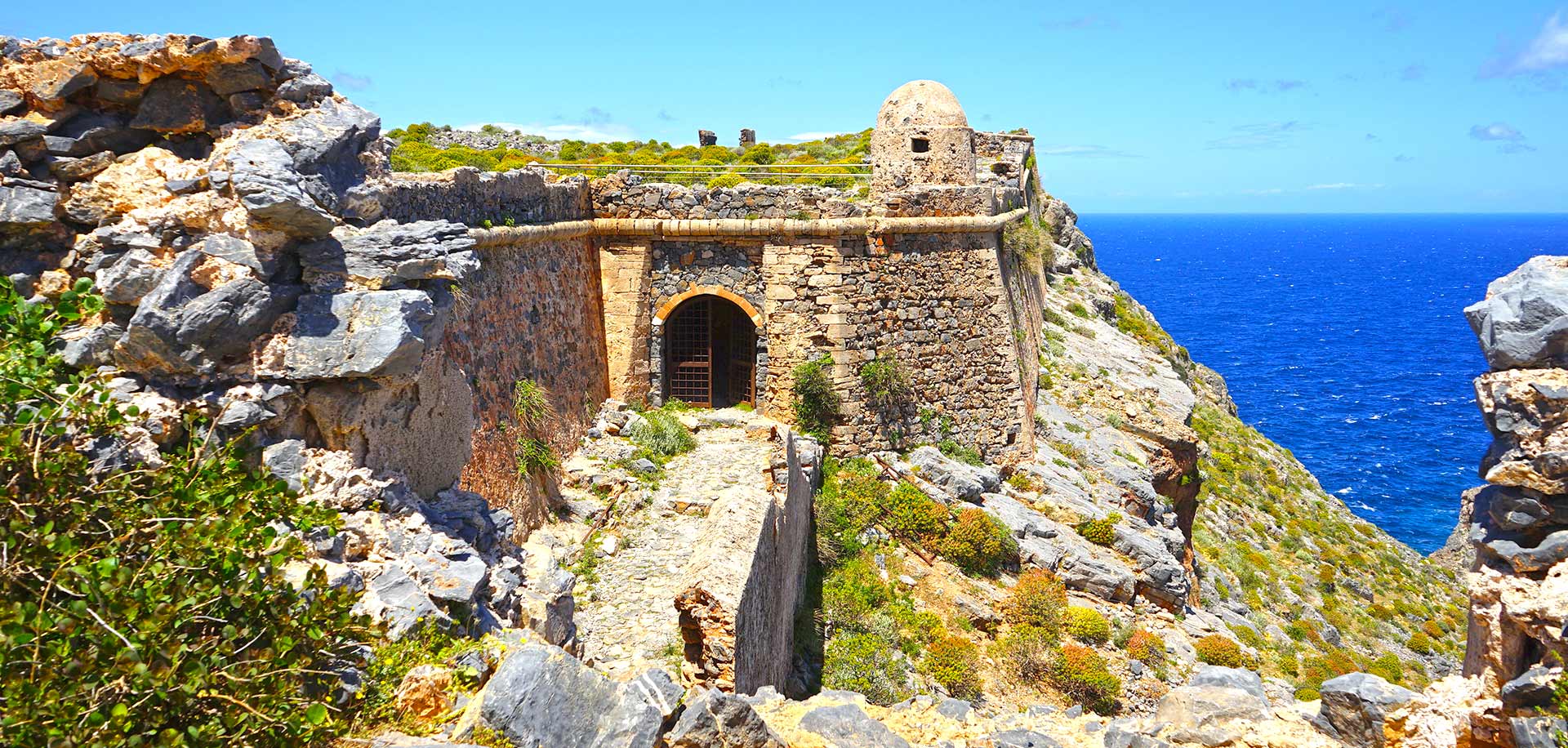
Perched 137 meters above the turquoise waters of Gramvousa Island, the Gramvousa Fortress stands as one of Crete’s most impressive examples of Venetian military architecture. Built between 1579 and 1584, this formidable structure was designed by Latino Orsini, the same architect responsible for Souda Fortress.
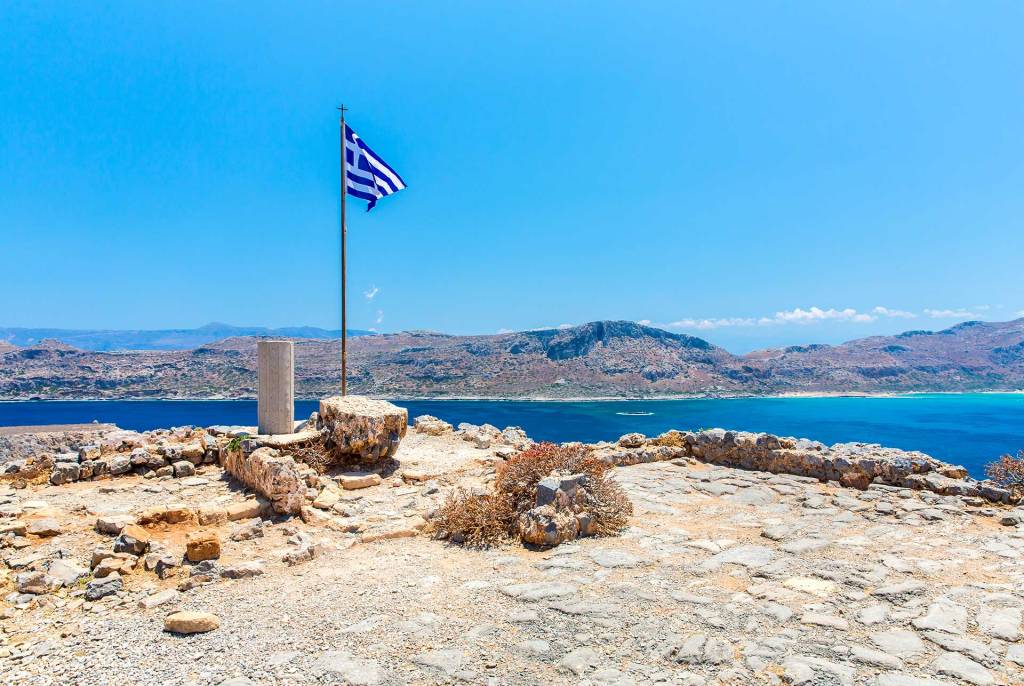
The Venetians constructed the Gramvousa Castle to protect the island from Ottoman attacks and to strengthen Crete’s western defenses. Overlooking the natural harbor of Imeri Gramvousa, the fort offers panoramic views of the Balos Lagoon, a stunning destination often included in the popular Gramvousa and Balos tour from Chania. Moreover, from this height you can clearly overlook the beautiful Gramvousa Beach, famous today for its shallow turquoise waters and the iconic shipwreck lying just offshore.
Structure and Strategic Location
The fortress of Gramvousa features an irregular triangular layout. Three sides are protected by strong defensive walls and bastions, while steep cliffs on the northern side serve as natural fortifications.
Although a lightning strike in 1588 caused the gunpowder magazine to explode, severely damaging the structure, the Venetians quickly rebuilt the fortress in 1630. Its commanding position continued to make it a key defensive point along Crete’s rugged coastline. Today, this elevated vantage point also offers visitors a stunning view of the Gramvousa Shipwreck, a rusty cargo vessel stranded in the shallow waters below—now a popular feature photographed by visitors exploring the island.
From Venetian Rule to Ottoman Control
Even after most of Crete fell to the Ottomans in 1669, the Venetians managed to keep a few strategic fortresses, including Gramvousa. However, in 1692, the fortress was lost when the Venetian commander betrayed his post for a bribe. The man later became infamous in Constantinople under the mocking nickname “Gramvousa Captain”.
This event marked the beginning of Ottoman dominance on Gramvousa Island, yet the fortress continued to hold both military and symbolic importance for centuries.
Gramvousa Fortress and Its Pirate Legacy
During the Greek War of Independence, Gramvousa Fortress took on a new and dramatic role. On August 2, 1824, freedom fighters from Sfakia seized the island, making it the first liberated part of Crete.
For several years, it served as a revolutionary base, but harsh living conditions soon pushed the fighters to desperate measures. As supplies ran out, they turned to piracy, raiding Ottoman and European ships as well as nearby coastal settlements. As a result, Gramvousa Castle earned a reputation as a pirate haven, both feared and legendary across the Mediterranean.
The situation eventually drew the attention of European powers. In 1828, combined European naval forces captured the island, arrested the pirates, and restored order. Soon after, a joint garrison of British, French, and Greek soldiers was stationed at Gramvousa Fortress, under the command of Hatzimichalis Dalianis.
However, in 1831, control passed to Egyptian forces, marking the end of the fortress’s active military history. Over time, it was abandoned, its stone walls left to weather under the Cretan sun.
Exploring the Ruins of Gramvousa Fortress Today
Today, visitors to Gramvousa Island can still see impressive remnants of the Venetian fortifications. Highlights include:
- Two large domed cisterns once used to collect rainwater
- The Church of the Annunciation
- The remains of barracks, gunpowder stores, and command posts
From the top, you’ll enjoy breathtaking views of the Balos Lagoon, with its turquoise shallows and white sandbar below. Whether you visit as part of a Gramvousa and Balos tour from Chania or on a private boat trip, the fortress remains a must-see for history lovers and adventure seekers alike.