

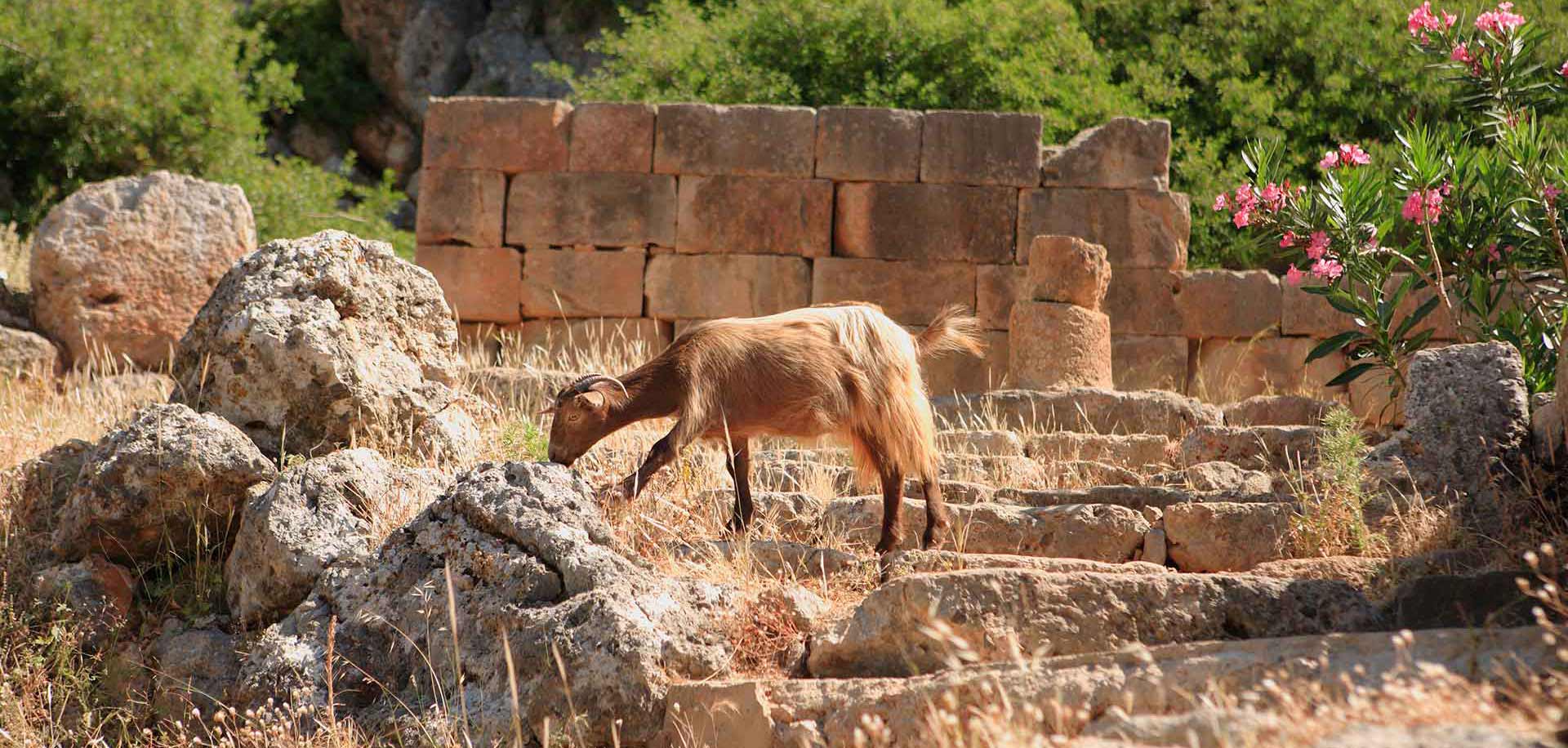
The Lissos Ancient City was once a flourishing settlement on the southern coast of Crete, standing as a major urban and religious hub from the Classical period through Late Antiquity. Nestled in a peaceful valley between Sougia and Paleochora, Lissos Crete served as the port for the Doric city of Elyros. However, its prosperity came to an end in the 9th century when the city was destroyed by Saracen raiders.
Today, the Lissos Archaeological Site offers a fascinating glimpse into Crete’s ancient past. As you walk through its ruins, you can almost sense the vitality that once filled this historic port city.
The Temple of Asclepius: A Healing Sanctuary in Lissos
Among the most impressive discoveries at the Lissos archaeological site is the Temple of Asclepius, or Asclepieion, dedicated to the god of healing. Thanks to the area’s thermal springs, pilgrims from across Crete once journeyed here seeking cures and divine favor.
Built in the 3rd or 2nd century BCE, the temple is considered the earliest known rhythmic Doric temple in Crete, featuring a rare combination of Doric and Ionic styles. Though much of it was damaged by an earthquake, its mosaic floors—depicting animals and intricate patterns—still captivate visitors.
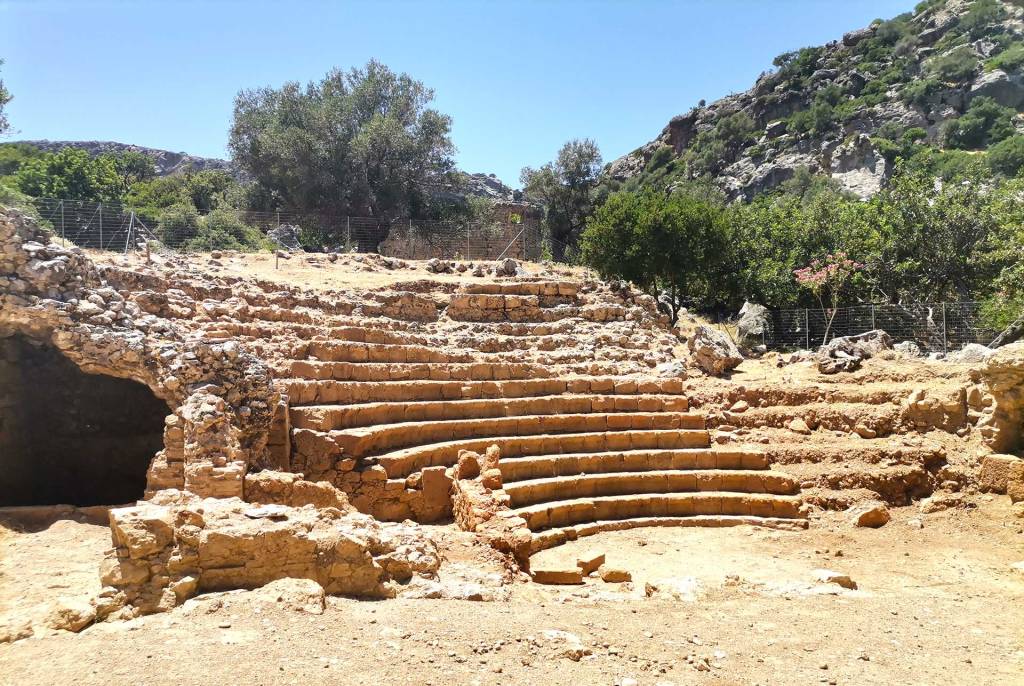
Many statues found here, including several of children and a magnificent statue of Asclepius, are now displayed in the Archaeological Museum of Chania in Halepa. Nearby, you can also find remains of a Roman necropolis, vaulted tombs, parts of an Odeon (Roman theatre), and traces of the ancient port that once linked Lissos to the wider Mediterranean world.
The Prosperity of the Ancient Cretan City
Archaeological excavations have revealed coins, inscriptions, and statues that highlight Lissos’s prominence as both a commercial and religious center. Notably, the city minted its own currency—one side featuring the head of the goddess Artemis, and the other a dolphin, symbolizing its deep maritime and divine connections.
Furthermore, Lissos maintained a strong fishing and trading fleet, which contributed greatly to its regional influence. This blend of religion, commerce, and seafaring made Ancient Lissos a remarkable example of a thriving Mediterranean city-state.
How to Visit and Where Is Lissos Today
Wondering ‘where is Lissos today’? The site lies in southwest Crete, near Sougia Village, and although it’s uninhabited, it’s quite accessible. Travelers can reach Lissos Crete either by boat from Sougia or on foot via the scenic 90-minute hiking trail of the Gorge that winds along the coast. At the shore, a small pebble beach now offers tranquility in stark contrast to the city’s ancient bustle. Adjacent to the beach stands the church of Panagia, built on the remains of an early Christian basilica that itself replaced an older pagan sanctuary.
Moreover, near the ancient Odeon, you’ll find a second chapel—Agios Kirikos—where a cherished local festival takes place every July 15, keeping the spiritual spirit of Lissos alive to this day.