

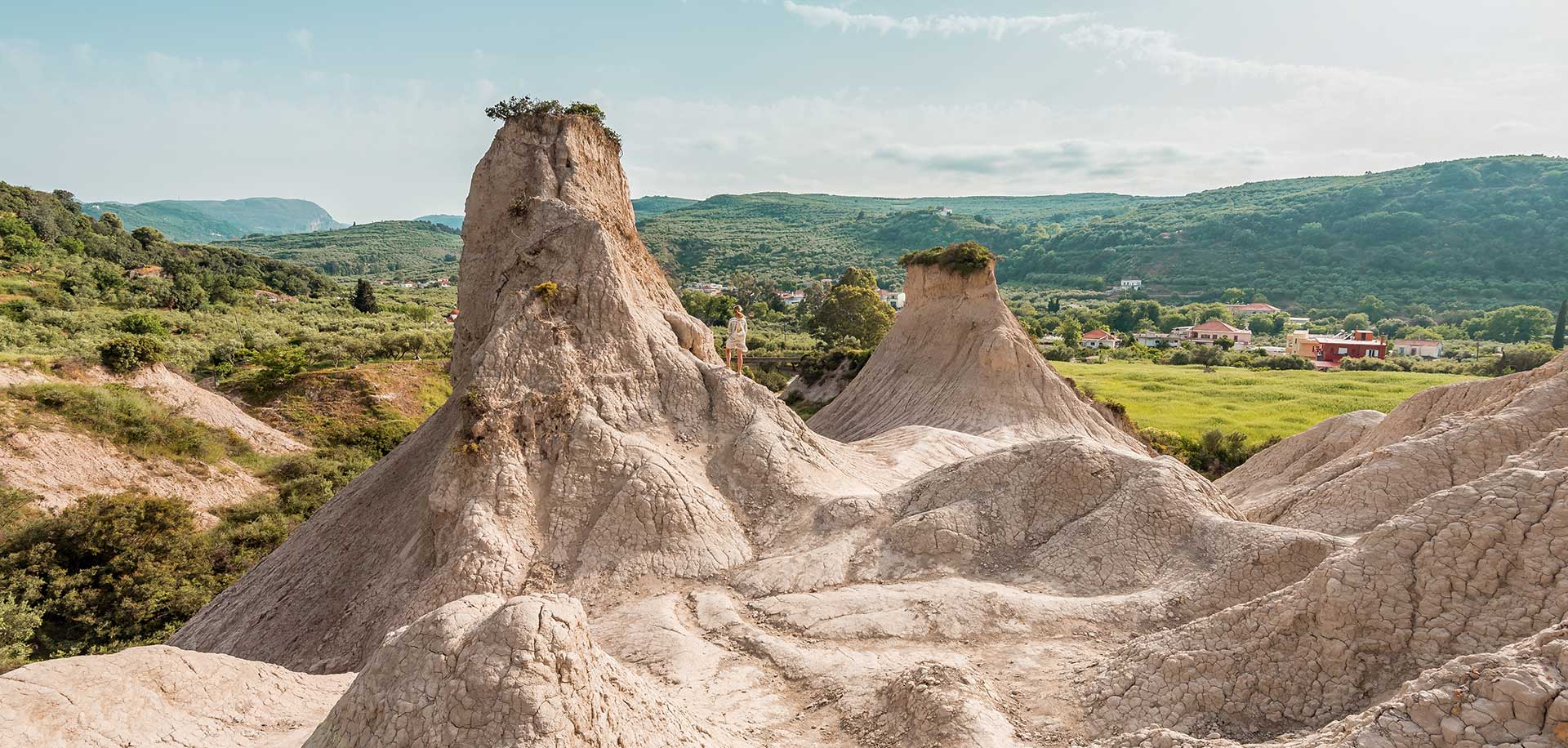
In the region of Kissamos, near the quiet village of Potamida, lies one of Crete’s most unusual natural wonders — the Komolithi Hills. These distinctive clay formations rise suddenly from the fertile plain, creating a breathtaking contrast with the surrounding greenery.
Over thousands of years, intense erosion shaped these soft clay mounds into their current conical forms. As a result, they look like solidified dunes, standing as silent sculptures in the Cretan countryside.
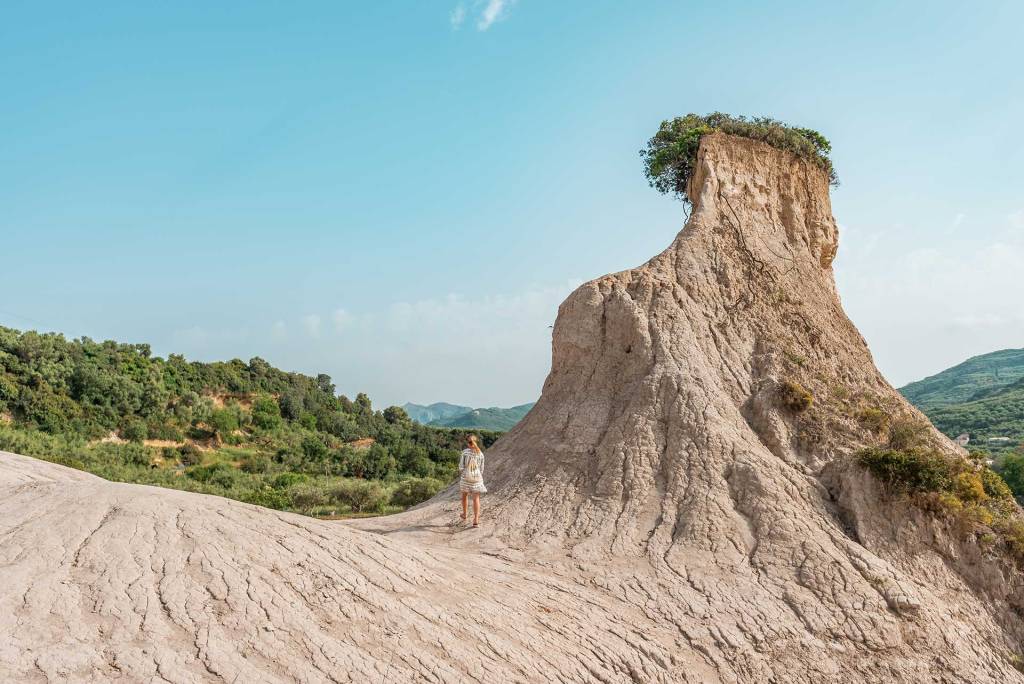
A Unique Landscape Near Potamida Village
Just a short walk from Potamida village, the Komolithi appear dramatically against the horizon. Their surfaces are mostly bare, covered only by scattered bushes that cling to the clay peaks. In contrast, the fields below are lush and full of life.
This striking difference between the barren hills and the fertile plain makes the Komolithi Hills an unforgettable sight for visitors exploring western Crete. Moreover, photographers and nature lovers are drawn here to capture the area’s unique light and textures — especially during sunrise or sunset.
Komolithi: A Rare Geological Wonder of Crete
From a geological perspective, the Komolithi are remnants of an ancient seabed that existed around 7.2 million years ago. The formations consist mainly of soft clay and silt, materials easily shaped by water and wind.
Interestingly, researchers have found marine fossils within the hills, offering clues about the region’s prehistoric environment. Because of their age and unusual form, the Komolithi Hills are often compared to the fairy chimneys of Cappadocia, though they remain uniquely Cretan in character.
Today, they stand as a rare and fascinating example of natural erosion and a must-see attraction for those seeking something beyond the island’s beaches.
Visiting the Komolithi Hills
Visiting the Komolithi Hills is simple and rewarding. The site lies just a few minutes from the main road connecting Kissamos to Topolia Gorge. Although small in area, it invites exploration — short walks allow you to admire the soft clay shapes up close.
However, visitors should take care, as the hills are fragile and can crumble easily after rain. For that reason, it’s best to stay on the paths and avoid climbing directly on the formations. Still, a visit here offers an unforgettable glimpse into Crete’s geological past — and a rare opportunity to witness the raw power of nature’s artistry.