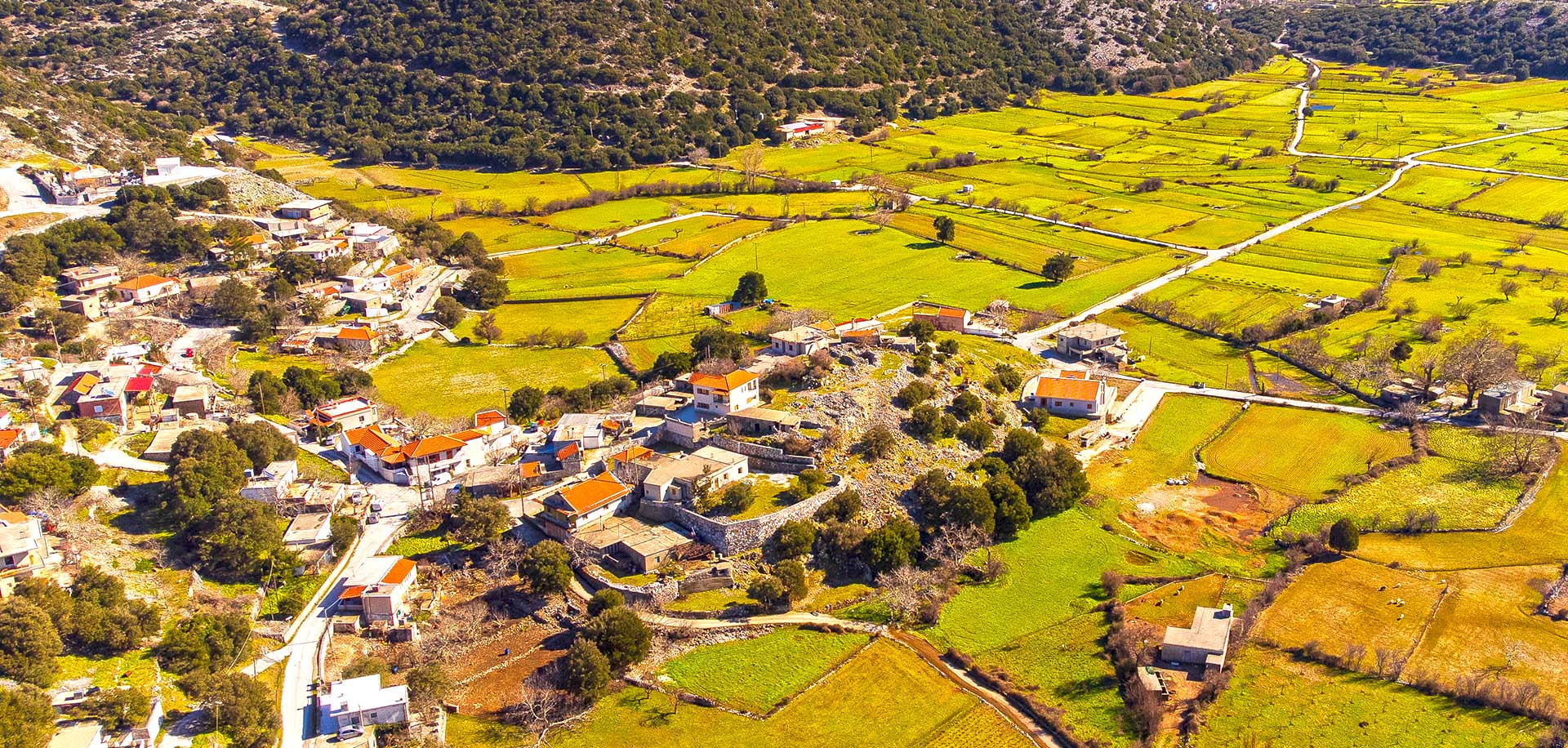
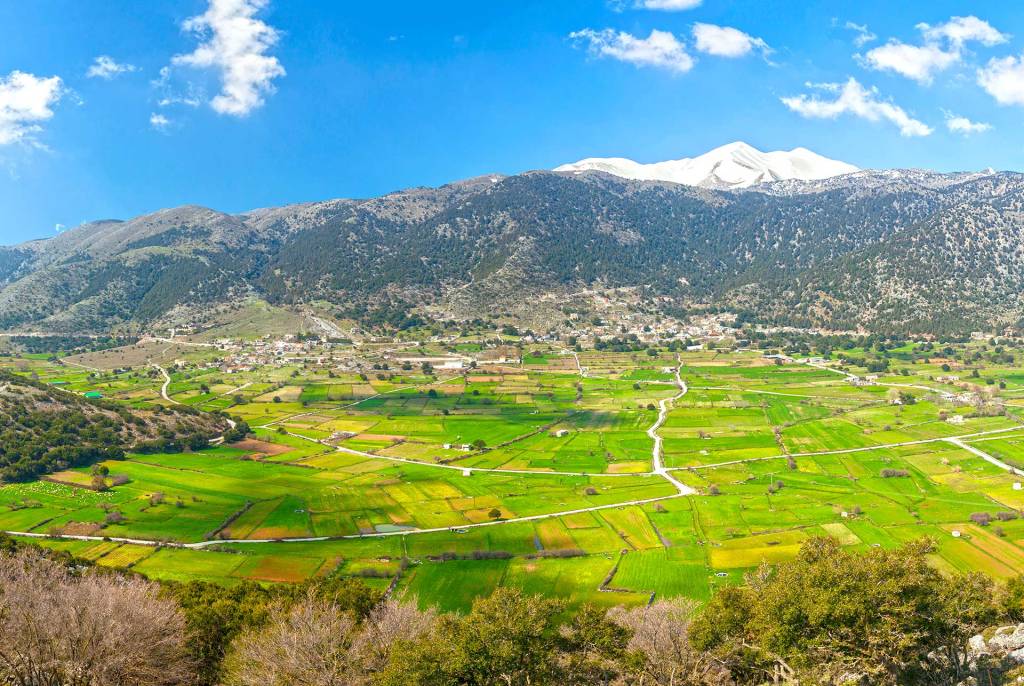
Askifou Plateau, located in the heart of the White Mountains of Crete, is a breathtaking mountainous plain rising about 730 metres above sea level. Surrounded by steep slopes and high peaks, it offers a diverse landscape that changes beautifully with the seasons. In winter, the plateau is often snow-covered, while in summer, it bursts into life with dense native vegetation and colorful wildflowers — a true highlight for anyone exploring Askifou Crete.
Interestingly, the name “Askifou” originates from the ancient term scythos, meaning “bowl,” referring to its distinctive open-bowl shape. Moreover, the earliest known mention of the name dates back to a 1388 court record related to uprisings in Anopolis and Askifou, highlighting its long and fascinating history.
Villages and the Strategic Importance of the Askifou Plateau
The Askifou Plateau encompasses four charming villages — Ammoudari, Goni, Kares, and Petres — all belonging administratively to the municipality of Sfakia. Due to its central location, the plateau serves as a natural passage between northern and southern Crete, especially along the historic route connecting Apokoronas to Chora Sfakion.
Because of this strategic position, Askifou has long held military significance. In fact, during various historical conflicts, the Fortress of Askifou and other defensive points were crucial for controlling movement through the mountains.
The Fortress of Askifou: Ottoman-Era Watchtowers
During the Ottoman period, two small defensive towers—known as koules—were constructed on the hills near the village of Goni. These fortresses offered commanding panoramic views over the Askifou Plateau and beyond. Built in the late 19th century, the Fortress of Askifou was part of a wider network of Ottoman watchtowers designed to monitor and control key mountain routes across Crete.
Although now in ruins, the remains of these Turkish fortresses continue to stand proudly, serving as silent witnesses to the area’s turbulent past and offering visitors a glimpse into Askifou Crete’s layered military history.
War Museum Askifou: A Tribute to WWII History
Because of its enduring strategic importance, Askifou Plateau played a noteworthy role during World War II. To commemorate this, the War Museum Askifou was founded in the village of Kares.
Established by Georgios Hadjidakis, the museum exhibits over 2,000 wartime artifacts, including weapons, uniforms, maps, and personal memorabilia. Consequently, the War Museum Askifou serves as both an educational and emotional experience, offering valuable insights into the island’s wartime history and the resilience of its people.
Tourism, Nature, and Activities in Askifou Crete
Today, Askifou Plateau has evolved into a welcoming hub for visitors eager to explore Sfakia and Frangokastello. Travelers can enjoy local taverns, family-run guesthouses, and traditional Cretan hospitality in an authentic mountain setting.
Moreover, outdoor enthusiasts will find plenty to do. The nearby Imbros Gorge offers scenic and accessible hiking, while trails leading westward connect the plateau with the Niatos Plateau and Tavri Refuge, both part of established mountaineering paths in the White Mountains of Crete.
In short, Askifou Plateau seamlessly combines nature, history, and culture — making it an essential stop for anyone exploring Chania and southern Crete.
Check availability and rates
Recommended Hotels
Here is a selection of recommended places to stay in Askifou, chosen for their traditional character, warm hospitality, and beautiful mountain surroundings. We partner with Expedia. When you book a hotel through this widget, we receive a commission.