

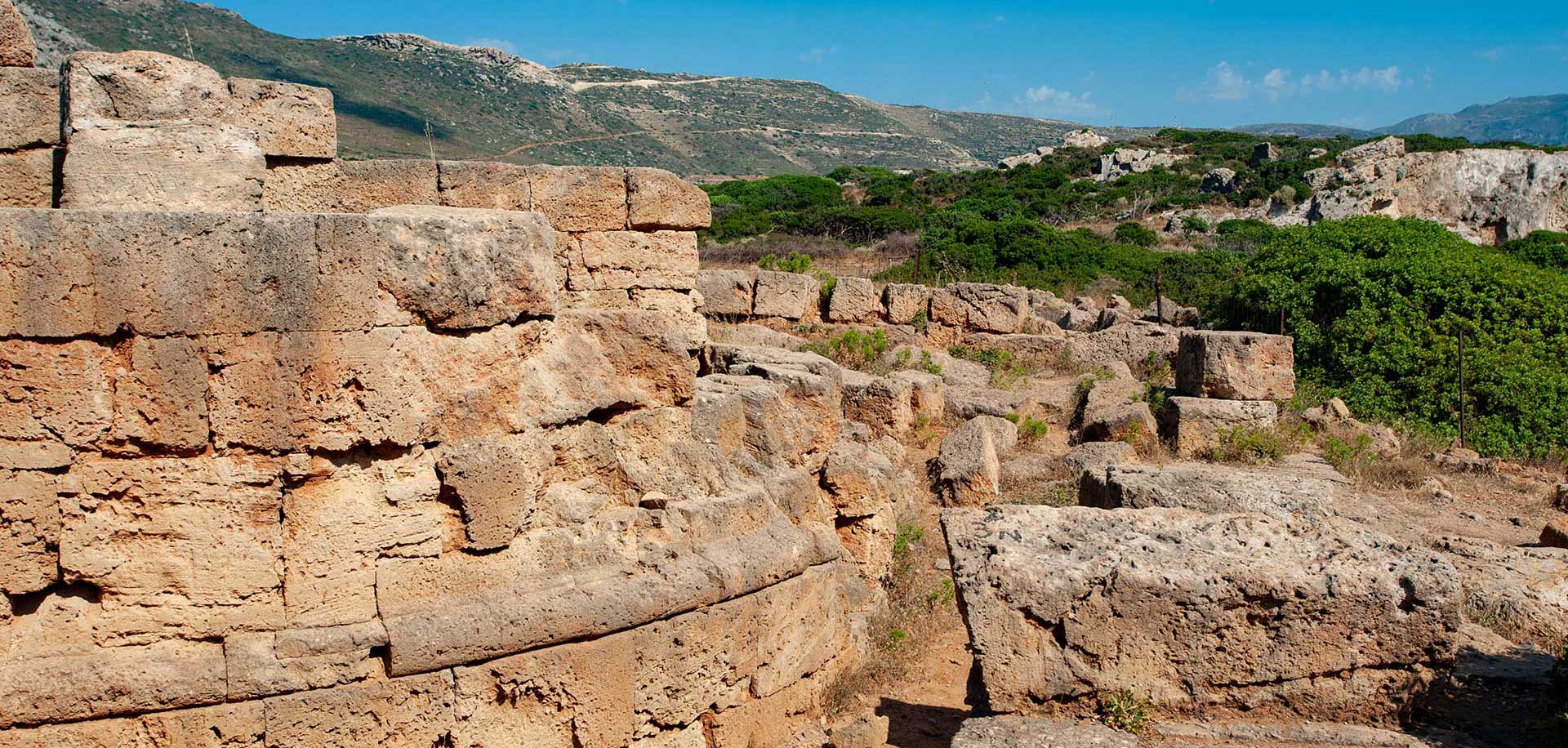
Ancient Phalassarna (also spelled Phalasarna or Falassarna) was once a thriving city-state and a major commercial hub in western Crete during the Hellenistic period. Strategically positioned on the island’s western coast, ancient Falassarna Crete was renowned for its exceptionally well-designed harbor—the only natural port along that rugged shoreline.
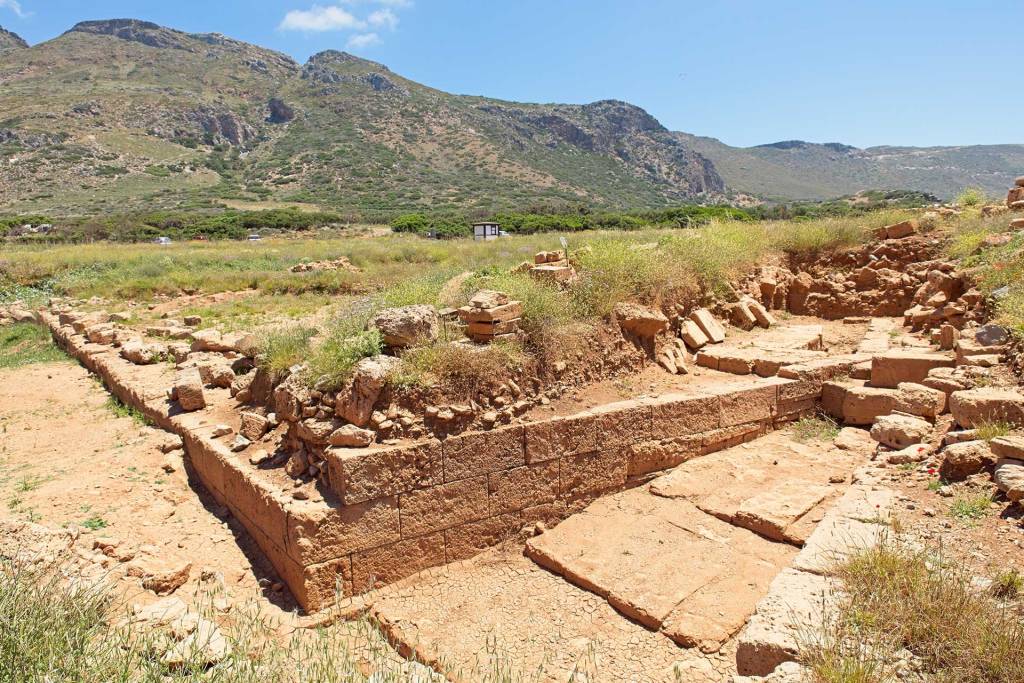
Built within a sheltered lagoon and connected to the open sea by a narrow channel, the harbor provided excellent protection for ships. Moreover, it was reinforced with impressive defensive walls that extended along its quays, a testament to the city’s advanced engineering and maritime importance.
Early Origins and Mythology of Ancient Phalassarna
While Phalassarna likely emerged from the gradual unification of smaller local communities, archaeological evidence reveals that the region had been continuously inhabited since the Early Minoan period.
Interestingly, the city’s name is believed to come from a local nymph, Falassarni, a mythical figure deeply rooted in the area’s lore. Meanwhile, its patron deity, Dictynna (Vritomartis), was associated with both the natural world and maritime elements—highlighting the city’s deep spiritual and environmental connections.
Acropolis, Maritime Power, and Roman Destruction
Perched on a cape, Ancient Phalassarna included a fortified acropolis overlooking the sea. Excavations at the archaeological site of Phalasarna have revealed robust defensive walls, public facilities, and sacred spaces, including a temple dedicated to the goddess Demeter.
Because of its prime location, the city maintained direct maritime routes with Alexandria in Egypt. Consequently, Ancient Phalasarna flourished as a vital trading hub and even minted its own coins. These coins often depicted a female figure beside a trident and the letters ‘FA’, representing both the city’s independence and its maritime strength.
However, prosperity also brought peril. In addition to legitimate trade, the people of Phalassarna engaged in piracy—a common but risky practice among coastal cities of that period. As a result, the Romans intervened, and in 69 BC, they destroyed Phalassarna, sealing the harbor’s entrance with massive stone blocks to prevent further access.
The 365 AD Earthquake and Geological Transformation
Centuries later, in 365 AD, a powerful earthquake struck Crete and caused the island’s western coast to rise several meters. Consequently, the once-bustling harbor of Ancient Phalassarna was left stranded roughly 100 meters inland. This dramatic geological shift explains why today, the ruins of the ancient port and city structures lie far from the sea—frozen in time and stone.
Archaeological Discoveries and Modern Exploration
Exploration of Ancient Phalasarna began in the late 19th century when English travelers identified the remains of its ancient harbor and nearby buildings. Since then, archaeologists have continued to uncover fascinating artifacts and architectural remnants.
Today, visitors to the archaeological site of Phalasarna can admire:
- The preserved harbor structures
- The fortified acropolis
- The city’s ancient cemetery, featuring 43 archaic tombs
- A large stone seat known as the “Throne of Phalassarna”, which may have served as a speaker’s platform or a monument, possibly dedicated to Poseidon, god of the sea.
Altogether, these discoveries offer a remarkable glimpse into the maritime power, cultural depth, and resilience of Ancient Phalassarna (Crete).
Discover also: Falassarna Beach