

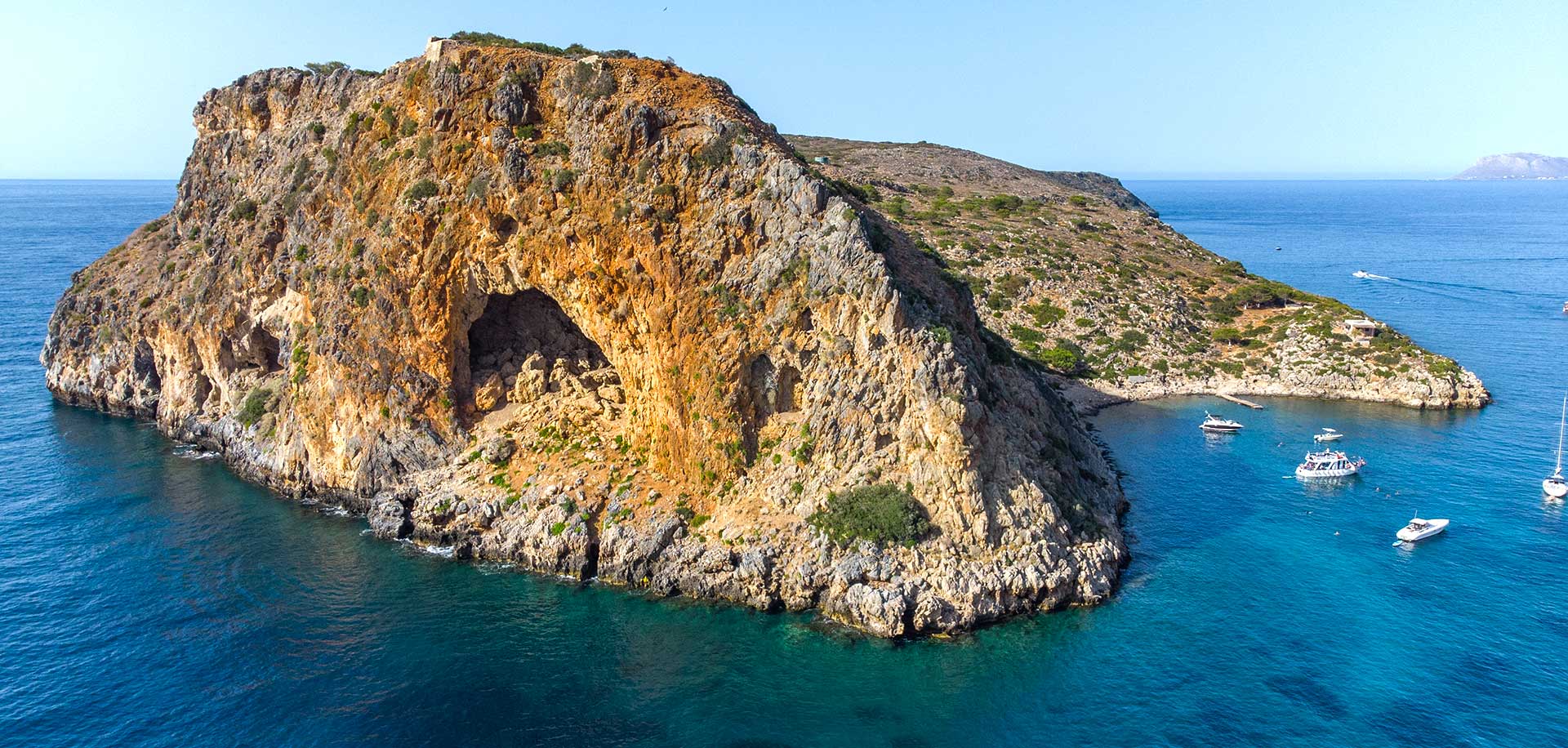
The Agioi Theodoroi Islands (also known as Agioi Theodoroi Island or Theodorou Island) are two small, uninhabited islets located just north of Agia Marina and Platanias in western Crete. The larger islet is called Thodorou Island, while the smaller one is known as Glaronisi or Thodoropoula.
Together, these rocky outcrops form a site of remarkable historical, environmental, and cultural significance. Moreover, they create a distinctive natural landmark visible from the coast, symbolizing both Crete’s natural beauty and its layered past.
Natural Landscape and Ecological Importance of Thodorou Island
Thodorou Island is primarily rocky and distinguished by a large arched cave on its southern side. Interestingly, locals believe the cave’s shape resembles an open mouth, giving the island an almost mythical presence when viewed from afar.
Because of its unique natural features and ecological value, Theodorou Island has been designated a Specially Protected Area under the European NATURA 2000 network. Furthermore, the island serves as a sanctuary for the endangered Cretan wild goat, or kri-kri, which thrives in its undisturbed environment.
Public access to the island is generally restricted to preserve its fragile ecosystem. However, once a year, on the feast of the Saints Theodores, a limited number of visitors are permitted to arrive by boat from Platanias or Agia Marina to honor this local religious tradition.
The Historical Legacy of Agioi Theodoroi Island
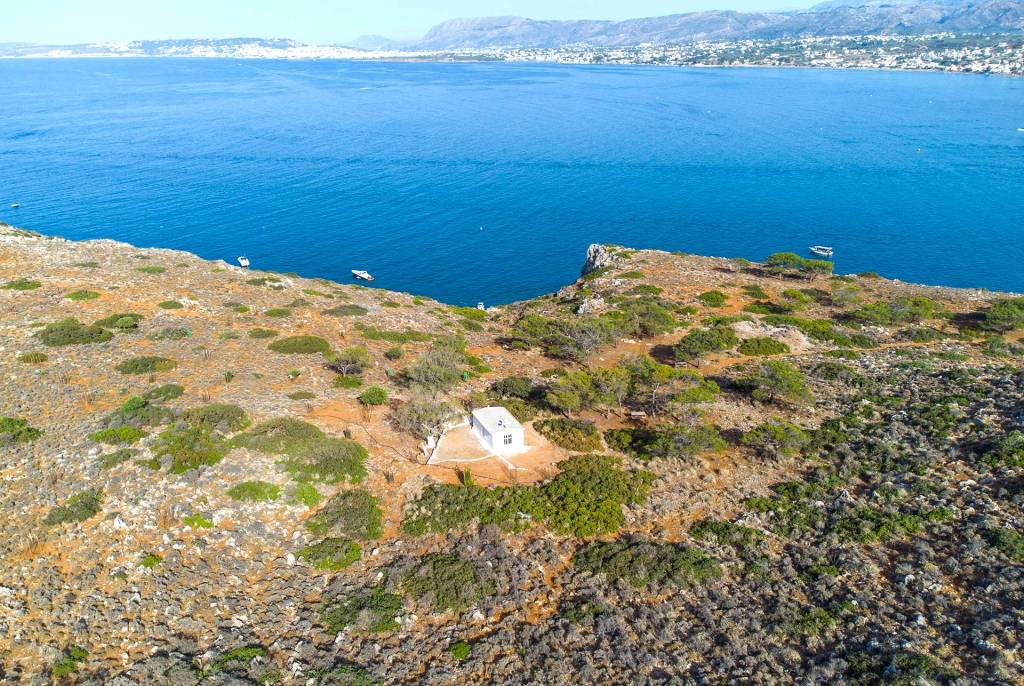
Historically, Agioi Theodoroi Island has been known since ancient times. In antiquity, it was called Akoition, and references to it appear in several early texts. The current name, Thodorou, originates from the partially ruined church of Agioi Theodoroi that still stands on the island.
During the Venetian occupation of Crete, Thodorou Island—then known as San Thodoro—gained strategic importance. In 1574, the Venetians constructed two forts on the island to strengthen their coastal defenses. These fortifications later played a role during the conflicts with the Ottoman Turks.
Notably, in 1645, about 70 soldiers stationed on the island fought valiantly against Ottoman forces. When defeat became inevitable, the defenders made a fateful choice: they ignited the island’s gunpowder magazine, sacrificing themselves and their enemies. Consequently, Theodorou Island and its fortresses have remained deserted ever since—a poignant reminder of courage and tragedy intertwined in Cretan history.
The Mythical Creation of the Agioi Theodoroi Islands
Beyond its historical reality, Agioi Theodoroi Island is steeped in local legend. According to one enduring myth, a giant sea creature and its cub—often described as resembling bears—emerged from the sea and advanced toward Crete. In response to the desperate prayers of the island’s inhabitants, the creatures were turned to stone, forming what we now recognize as Theodorou and Glaronisi.
This timeless tale, blending myth with geography, enriches the islands’ cultural identity. Moreover, it reflects how the people of Crete have long intertwined natural landmarks with stories of divine intervention and protection.
Visiting and Protecting Agioi Theodoroi Today
Although Agioi Theodoroi Island is not open for casual tourism, visitors can admire it from the beaches of Agia Marina and Platanias. Boat tours often approach the islets closely, allowing passengers to appreciate their rugged cliffs, fort ruins, and the pristine environment from the sea.