

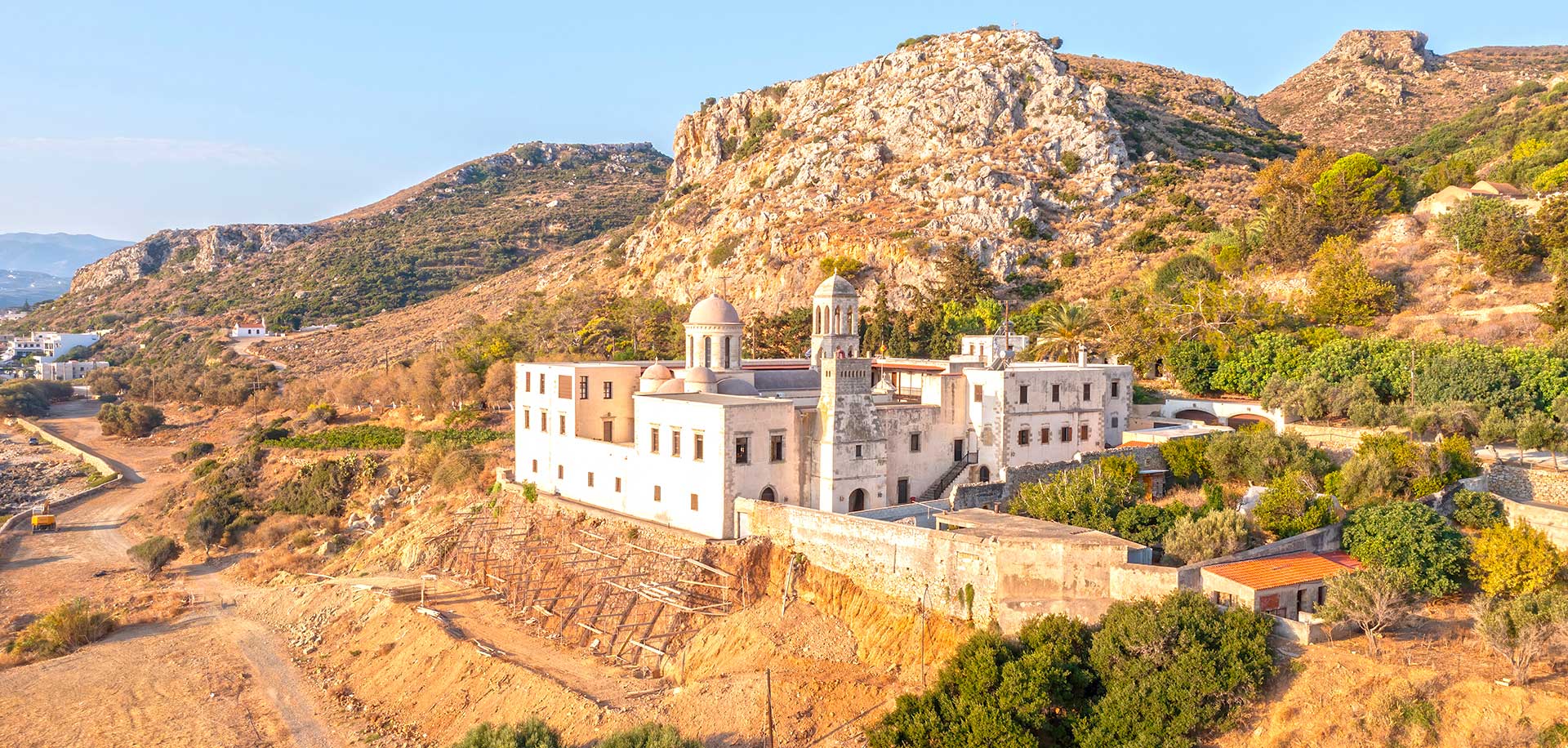
The Gonia Odigitria Monastery, also known as Odigitria Gonia Monastery, stands among the most important Orthodox monasteries in Crete. It began in the 9th century at ancient Menies and honored Saint George.
The first monks built it near a former temple of Britomartis, the patron deity of fishermen. In the early 17th century, the monks moved the monastery to Kolymvari. They preferred the new site because its natural layout offered better protection from attacks.
LAYOUT AND CHARACTER | RESISTANCE AND WARTIME HARDSHIPS | MUSEUM AND HISTORICAL REMAINS | MAP
Fortified Layout and Venetian Character
The monastery shows strong Venetian influence. Its builders shaped it like a compact fortress to resist pirate raids. The seaside complex is dedicated to the Assumption of the Virgin Mary and is also called Panagia Odigitria. According to tradition, the Cypriot monk Vlasios came here after a vision led him to an icon of the Virgin Mary.
He later founded the new monastery with help from Benedictos Tzagarolos. The name “Gonia” comes from its position on a sharp bend of the Chania Bay coastline. In Greek, gonia simply means “corner.”
Resistance, Attacks, and Wartime Hardships
During Ottoman rule, the Moni Gonia Monastery often sheltered Cretan rebels. The monks supported them, so the monastery faced repeated assaults. It endured major damage during 17th-century attacks and again in the Cretan Revolt of 1866–1869.
A clear reminder remains today. Visitors can still see the Gonia Monastery cannonball wall, where a cannonball from that era sits lodged in the stone. Later, during World War II, the monks offered refuge to Allied soldiers. German forces then bombed the monastery and arrested several members of its brotherhood.
Museum, Chapels, and Surviving Relics
Today, the monastery still functions as an active religious center. It also maintains a museum with valuable Byzantine icons and ecclesiastical items from the 15th to 17th centuries. Several small chapels surround the grounds and give visitors quiet places to reflect.
Meanwhile, the remains of the original 9th-century monastery rest on a nearby hill and provide an extra glimpse into the site’s long past. Overall, the Gonia Odigitria Monastery reflects centuries of Cretan history. It combines faith, culture, and defense in one enduring landmark.