

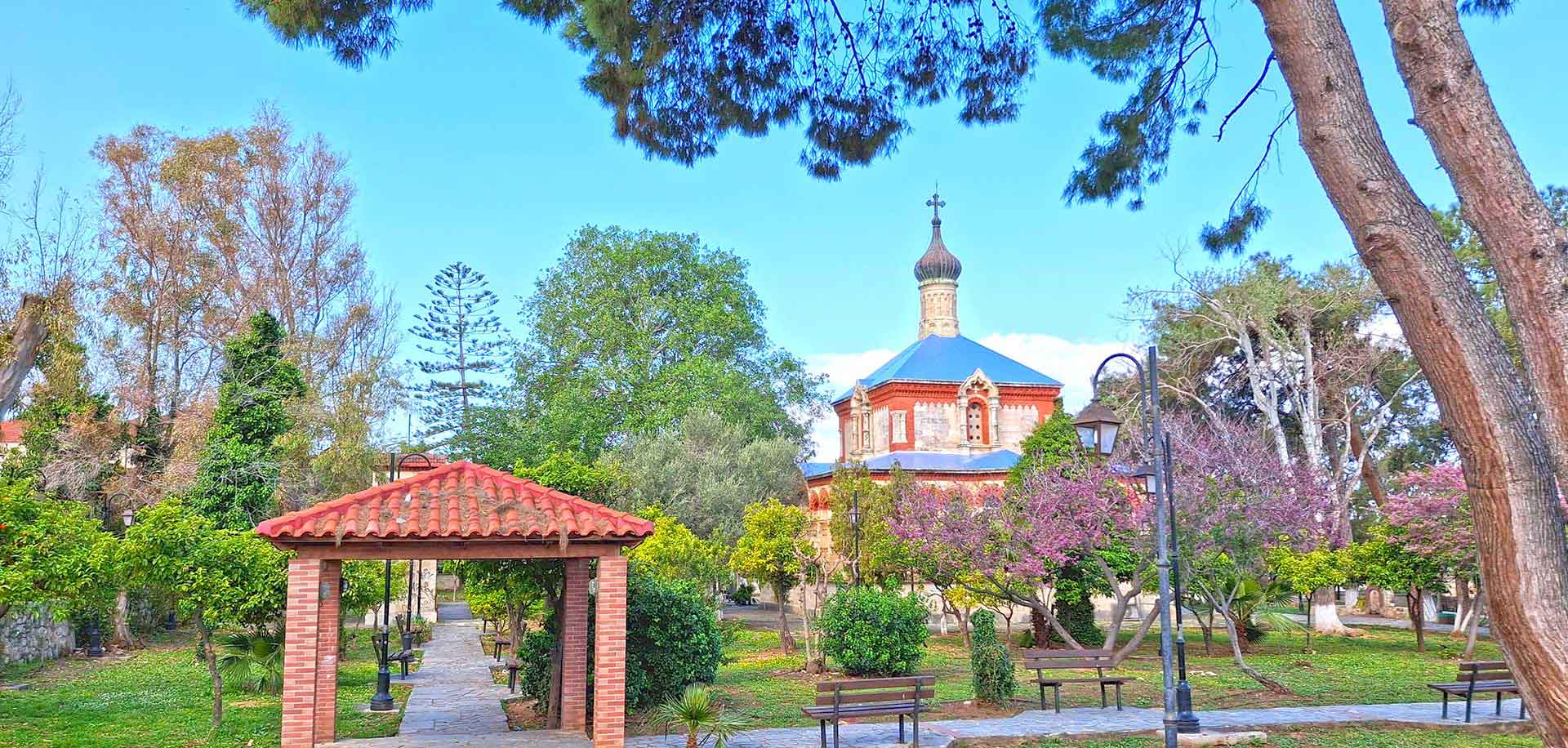
Tucked away in the peaceful neighborhood of Halepa in Chania, the St. Mary Magdalene Church is a small yet striking landmark that connects Crete’s history with both Greece and Russia. Although modest in scale, the church immediately captures attention thanks to its unique architecture and beautifully maintained garden. Moreover, its convenient location—just a short walk from the Venizelos Museum and the Archaeological Museum—makes it an easy and worthwhile stop for visitors exploring the area.
THE ARCHITECTURE OF ST MARY MAGDALENE CHURCH | THE HISTORIC INAUGURATION | CHURCH’S LOCATION
Russian Influence on Crete: The Architecture of St Mary Magdalene Church
Built in 1901, the St Mary Magdalene Church stands out for its distinct Russian architectural style, featuring a decorative dome that adds a rare touch of Eastern elegance to the Cretan landscape. The church was commissioned by Prince George of Greece during his tenure as High Commissioner of Crete, created as a tribute to his sister Maria’s visit. Additionally, her husband, Grand Duke George of Russia, funded the project with a generous donation of 10,000 rubles—a substantial amount at the time. Consequently, the building reflects a unique blend of political, cultural, and architectural influences.
A Royal Beginning: The Historic Inauguration
The Saint Mary Magdalene Church was officially inaugurated in 1903 in the presence of Queen Olga of Greece, along with other distinguished guests. This royal gathering highlighted the importance of the church for both the local community and the Greek royal family. Later, after Prince George left Crete in 1909 following the Therisso revolt and the island’s unification with Greece, he donated the church to the city of Chania. As a result, it became a cherished cultural and historical monument for future generations.